

Hair loss is incredibly common, but it never feels “common” when it’s happening on your own head. It can affect confidence, relationships, and even career choices, which is why the search for hair restoration products is about much more than vanity.
“Why is this happening to me?”
Imagine this: you’re in your early thirties, getting ready for work, and you notice more scalp than usual in the bathroom mirror. At first you blame the lighting. A few months later, you’re angling your head in photos and avoiding bright overhead lights at parties.
That’s basically what happened to Daniel, a 34‑year‑old project manager. He started seeing more hair in the shower drain and on his pillow, and almost overnight he went from “easygoing guy” to someone who avoided eye contact during Zoom calls because he was sure everyone was staring at his thinning hair. His story is not unusual: more than 80 million Americans live with noticeable hair loss, and about two‑thirds of men see some thinning by age 35. Women are deeply affected too; roughly 40% of Americans with hair loss are women.
For most people, the first question is simple: “Why is this happening to me?” The honest answer is that hair loss has many possible causes.
Common ones include:
- Genetics: This is the big one. If your parents or grandparents had thinning hair or baldness, you may be more likely to have it too, in a condition called androgenetic alopecia (often called male pattern baldness or female pattern hair loss).
- Hormones: Pregnancy, childbirth, menopause, and thyroid problems can throw off your body’s hormone balance and disrupt the hair growth cycle.
- Stress: Major life events, illness, surgery, or emotional trauma can push many hairs into a “shedding” phase at once, a pattern called telogen effluvium.
- Medical treatments and illnesses: Chemotherapy, some medications, autoimmune conditions, and scalp infections can all affect hair.
- Nutrition and lifestyle: Not getting enough protein, iron, vitamin D, or other nutrients, or frequent harsh styling, tight braids, and chemical treatments, can weaken hair over time.
By age 70, up to 80% of men and about 50% of women will develop androgenetic alopecia, which shows how widespread this issue really is. This kind of hair loss isn’t life‑threatening, but it can be emotionally heavy, especially for women, where it’s strongly linked to lower self‑esteem and higher anxiety and depression.
How hair actually grows
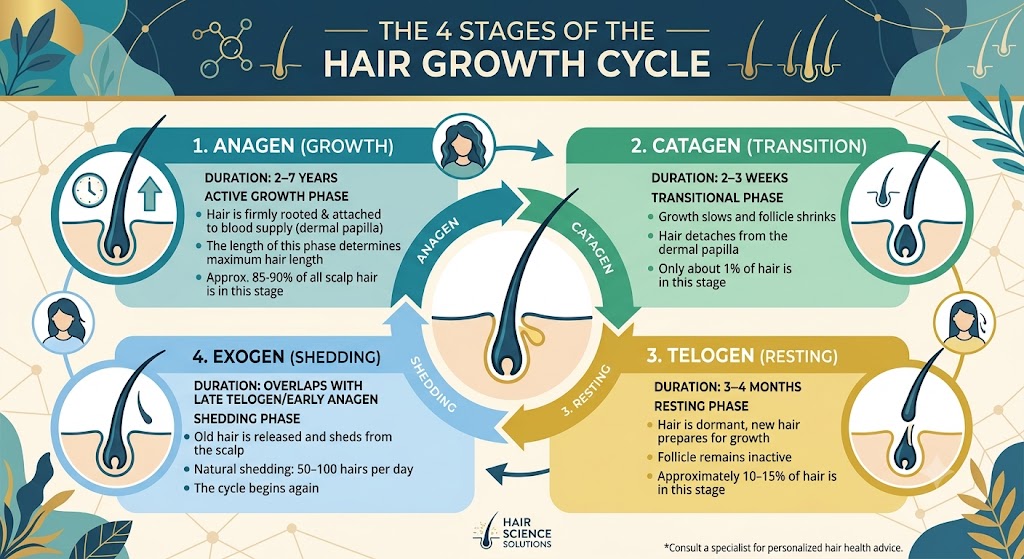
To understand why products work—or don’t—it helps to know a little about how hair behaves.
Each hair grows out of a tiny pocket in your skin called a follicle. Hair doesn’t grow forever; it has a cycle:
- A long “growing” phase, when the hair is actively getting longer.
- A short “transition” phase.
- A “resting” phase, when growth pauses.
- Finally, the hair sheds, and a new one eventually starts growing from the same follicle.
Hair loss can happen when more hairs than usual enter the resting and shedding phases, when follicles shrink and produce thinner, weaker hairs, or when follicles shut down altogether. Genetics, hormones, stress, and illnesses can all disturb this delicate cycle.
In androgenetic alopecia, a hormone called DHT (made from testosterone) gradually shrinks susceptible follicles, so each new hair grows thinner and shorter until the follicle produces barely any hair at all. That’s why some treatments focus on blocking DHT or improving the environment around the follicle so it can produce thicker hair again.
What actually works? (Science‑backed treatments)
Daniel’s first instinct was the same as many people’s: he bought a random “hair growth” shampoo he saw in an online ad. After a few months and no change, he felt worse—like he was wasting both money and hope.
This is where it helps to separate science from hype. In the United States, there are two main medications that have solid evidence and are approved by the Food and Drug Administration (FDA) for common genetic hair loss:
- Minoxidil (topical foam or liquid)
- What it is: A lotion or foam you apply directly to the scalp, often known by the brand name Rogaine.
- Who can use it: Men and women.
- How it works: It helps increase blood flow around the hair follicles and can extend the growing phase of hair, giving follicles a better chance to produce thicker strands.
- What to expect: It can slow down hair loss and even promote some regrowth, especially in people with recent or mild thinning. It usually takes several months of daily use before you see results, and if you stop, the benefits fade over time.
Because minoxidil is available over the counter, it’s often a first step for people who are just starting to notice thinning.
- Finasteride (oral pill)
- What it is: A prescription pill, often known by the brand name Propecia, mainly used for male pattern hair loss.
- Who can use it: Approved for men; it is generally not prescribed to women of childbearing age because of potential risks in pregnancy.
- How it works: It blocks the enzyme that turns testosterone into DHT, reducing DHT levels and helping protect hair follicles from shrinking.
- What to expect: Finasteride is especially effective at slowing or stopping further hair loss and can also lead to thicker hair for many users. Like minoxidil, it needs to be taken consistently over months to see results, and benefits usually decrease if you stop.
Some studies and clinics report that using minoxidil and finasteride together—one working on the outside, the other inside the body—can be more effective than using either alone, with success rates reported as high as about 90% in preventing further loss and promoting regrowth in suitable patients. This combination should always be used under medical supervision because, like all medications, these drugs can have side effects.
Other medical and procedural options
A physician or hair specialist may also suggest:
- Prescription treatments for specific causes (like thyroid disease, autoimmune conditions, or scalp infections).
- Low‑level laser or light devices designed to stimulate follicles, which have mixed but growing evidence.
- Platelet‑rich plasma (PRP) injections, where part of your own blood is used to create a solution injected into the scalp to encourage growth.
- Hair transplant surgery, which moves hair from thicker areas to balding spots for permanent coverage in many cases.
These options are more involved and often more expensive, but they can be life‑changing for some people, especially when simpler measures aren’t enough.
What about shampoos, vitamins, and “miracle” cures?
The market for hair loss products is huge, and that’s both good and bad news. Good, because there are many options; bad, because not all of them work.
Here’s a simple way to think about common product types.

Shampoos and topical products
Many shampoos and serums promise “thicker,” “fuller,” or “stronger” hair. Some can help improve the health of the scalp and hair shaft, which is worthwhile. For example, gentle shampoos that avoid harsh sulfates and products that reduce scalp inflammation can support overall hair health, especially if your hair has been damaged by bleaching, heat styling, or tight hairstyles.
However, most cosmetic shampoos do not reach deep enough or affect hormones enough to reverse genetic hair loss. They may make hair look better and break less, which can give the appearance of more volume, but that is not the same as actually regrowing hair from shrunken follicles.
If a shampoo contains minoxidil or another clinically studied ingredient, that is different—but regular “thickening” shampoos should be seen as supporting players, not the star of the show.
Supplements and vitamins
If your hair loss is partly due to poor nutrition or specific deficiencies—like low iron, vitamin D, zinc, or protein—then correcting these can genuinely help. In those cases, supplements under medical guidance can be useful.
But if your blood work and diet are normal, “hair vitamins” alone usually won’t reverse hereditary baldness. They may improve the strength and shine of existing hair, but they cannot override strong genetic or hormonal signals.
Red flags to watch for
Because hair loss is so emotional, people are vulnerable to bold promises. Be cautious if a product:
- Claims “guaranteed regrowth for everyone.”
- Has no clinical studies or only vague testimonials.
- Tells you to stop your doctor‑prescribed treatments.
- Is extremely expensive but vague about what’s inside.
If something sounds too good to be true, it probably is. When in doubt, look for treatments backed by real clinical research and talk to a healthcare professional before spending large sums of money.
The emotional side of hair loss
The hardest part of hair loss often isn’t the hair—it’s what it does to the way you see yourself. Studies show that androgenetic alopecia can significantly affect self‑esteem, social confidence, and mental health, especially in women.
Think of Maya, a 29‑year‑old teacher who began noticing widening part lines in her mid‑twenties. She started avoiding swimming and windy days because she was terrified her students or colleagues would see her thinning scalp. For months, she blamed herself—assuming it was something she had done wrong with her hair care. Only later did a physician explain that she had a genetic form of hair loss, likely passed down through her family.
A few things helped Maya cope:
- Understanding that she wasn’t alone and hadn’t “caused” her hair loss.
- Learning about realistic treatment options instead of chasing miracle fixes.
- Talking to a therapist about body image and anxiety.
- Finding online communities of other women dealing with hair thinning.
In other words, treating hair loss isn’t just about products; it is also about support, education, and sometimes counseling.
Practical tips if you’re starting to lose hair
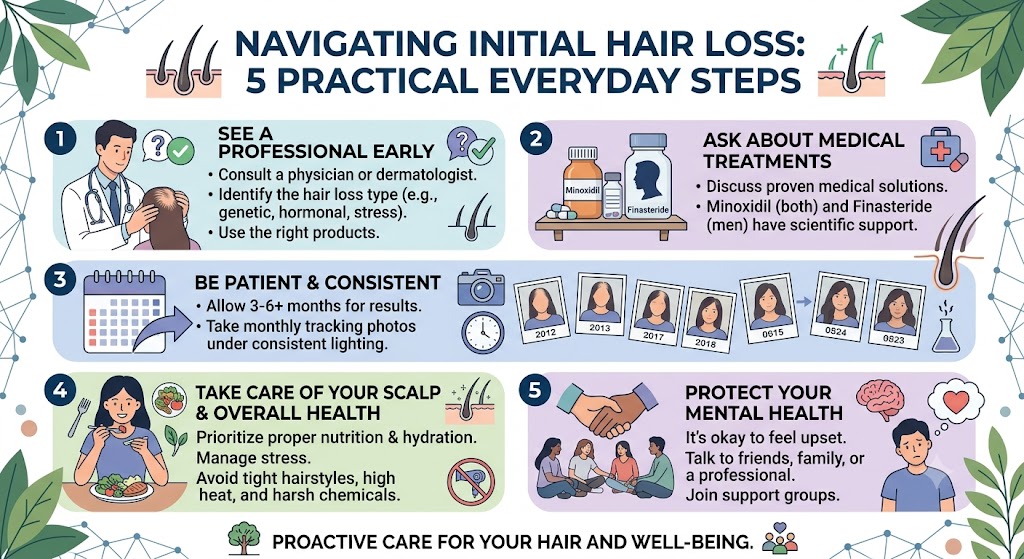
If you’ve just started noticing shedding or thinning, here are practical, everyday steps you can take:
- See a professional early: A physician can help figure out what kind of hair loss you have—genetic, hormonal, stress‑related, or something else—so you don’t waste time and money on the wrong products.
- Ask about medical treatments: For many adults with male or female pattern hair loss, minoxidil and, for men, finasteride are often the backbone of treatment because they have solid scientific support.
- Be patient and consistent: Hair grows slowly. Most treatments take at least 3–6 months before you can judge whether they’re helping. Taking photos every month under the same lighting can help you track changes more accurately than day‑to‑day glances in the mirror.
- Take care of your scalp and overall health: Eat a balanced diet with enough protein and key nutrients, manage stress as best you can, and avoid constantly tight hairstyles, harsh bleach, or very high‑heat tools. These steps won’t cure genetic baldness, but they create the best conditions for any remaining follicles to do their job.
- Protect your mental health: It’s okay to feel upset, angry, or embarrassed. Talking to friends, family, or a mental health professional can help you process those feelings. Support groups—online or in person—can remind you that you’re far from alone.
Remember: choices, not obligations. Some people decide to shave their heads, wear wigs, or use hair fibers; others commit to medical treatments or surgery. There is no “right” choice—only what feels right for your body, budget, and emotional wellbeing.
A Hopeful Outlook
Daniel eventually saw a dermatologist, started a combination of topical minoxidil and prescription finasteride, and made small changes like switching to a gentler shampoo and easing up on tight caps. Six months later, his hair wasn’t magically back to his teenage thickness, but the shedding had slowed, and his hairline looked more stable in photos. More importantly, he felt like he had taken back some control.
Hair loss can feel like something that is happening to you, but understanding the causes and the real options turns you from a passive victim into an active participant in your own care. For many people, the most powerful “restoration” isn’t just in the hair that comes back—it’s in the confidence that returns with it.
References for further reading
- Cleveland Clinic. Hair Loss: Causes, Treatments and Prevention Options.
- Penn Medicine. Hair Loss (Alopecia) – Symptoms and Causes.
- National Library of Medicine (PMC). Epidemiological landscape of androgenetic alopecia in the USA.
- National Library of Medicine (PMC). An overview of the genetic aspects of hair loss and its connection with various diseases.
- HairGrowthDoctor. FDA-Approved and Emerging Hair Loss Treatments.
- Solve Clinics. Finasteride vs Minoxidil (& Propecia vs Rogaine) For Hair Loss.
- SkinSmart Dermatology. Minoxidil vs. Finasteride – Hair Loss.
- SE Plastic Surgery. Hair Loss Causes & Treatments.
- ISDIN / dermatologist commentary on common causes of hair loss.
Disclaimer: All product and company names are trademarks™ or registered® trademarks of their respective holders, and any use or reference in this article is solely for the purpose of identifying the product, and does not imply an affiliation, sponsorship, or endorsement by the trademark owner.
Notice: This article was developed with the assistance of AI and refined by our editorial experts to ensure accuracy. The content provided is for informational purposes and does not constitute medical advice. Please consult with a licensed healthcare professional before starting any new medication or treatment plan. References to branded or compounded medications are based on current FDA availability and clinical data.